10 Realistic Daily Cleaning Habits for Busy Moms
You finish tidying the kitchen and turn around to find crumbs under the table again. Family life has a way of using the house as quickly as you reset it. A cleaning routine needs to account for that.
Small daily habits give recurring tasks a regular place in the day. You can choose two or three to start and leave the rest for later. These ideas focus on making your home easier to use between fuller cleaning sessions.
Illustrative lifestyle image created for The Rooted Home Journal.
Why do daily habits fall apart?
A routine becomes hard to repeat when every job is treated as equally urgent. It also helps to define the finish. “Clean the kitchen” can expand for an hour; “clear and wipe the table after dinner” has a visible end.
10 habits to try
1. Clear the table after a meal
Return dishes and put away the things used during the meal. Wipe the surface as needed. Link the job to the meal rather than waiting for an ideal cleaning window.
2. Check the sink before the evening ends
Decide what you can wash or load, and leave the sink usable. If the whole kitchen feels too much, choose the dishes you need for breakfast. A smaller finish can still help tomorrow.
3. Put clothes in the hamper
Give worn clothing a clear destination. A hamper near the place people change may work better than one across the house. Keep the location easy for children to use.
4. Finish one laundry step
Fold one small load or put away one stack. Choose the next step already waiting. Starting extra loads without time to finish can create another pile to manage.
5. Return shoes to the landing spot
Use the same spot each time people come in. Reduce the number of shoes kept there if it gets crowded. A short return habit works best with a simple destination.
6. Do a toy pickup at a natural transition
Try before dinner or before the bedtime routine. Name one category and help younger children begin. The AAP chore guide offers ideas for choosing suitable responsibilities.
7. Wipe a frequently used surface
Choose the kitchen table or a bathroom counter when it needs attention. Follow the product’s label and keep supplies away from children. This habit is about a specific surface, so avoid turning it into the whole room.
8. Deal with one day’s papers
Open the school folder, return a form, and put the remaining papers in their usual place. A small paper routine can prevent the counter from becoming the default filing system. Keep anything private out of open family areas.
9. Empty an overflowing bin
Check the bin that fills fastest in your household. Give the task an owner when sharing jobs. A visible finish makes it easier to know whether it has been done.
10. End with a five-minute shared return
Let each person return a few belongings to their homes. Use a song or timer if your family enjoys it. Stop at the agreed point so the habit remains manageable.
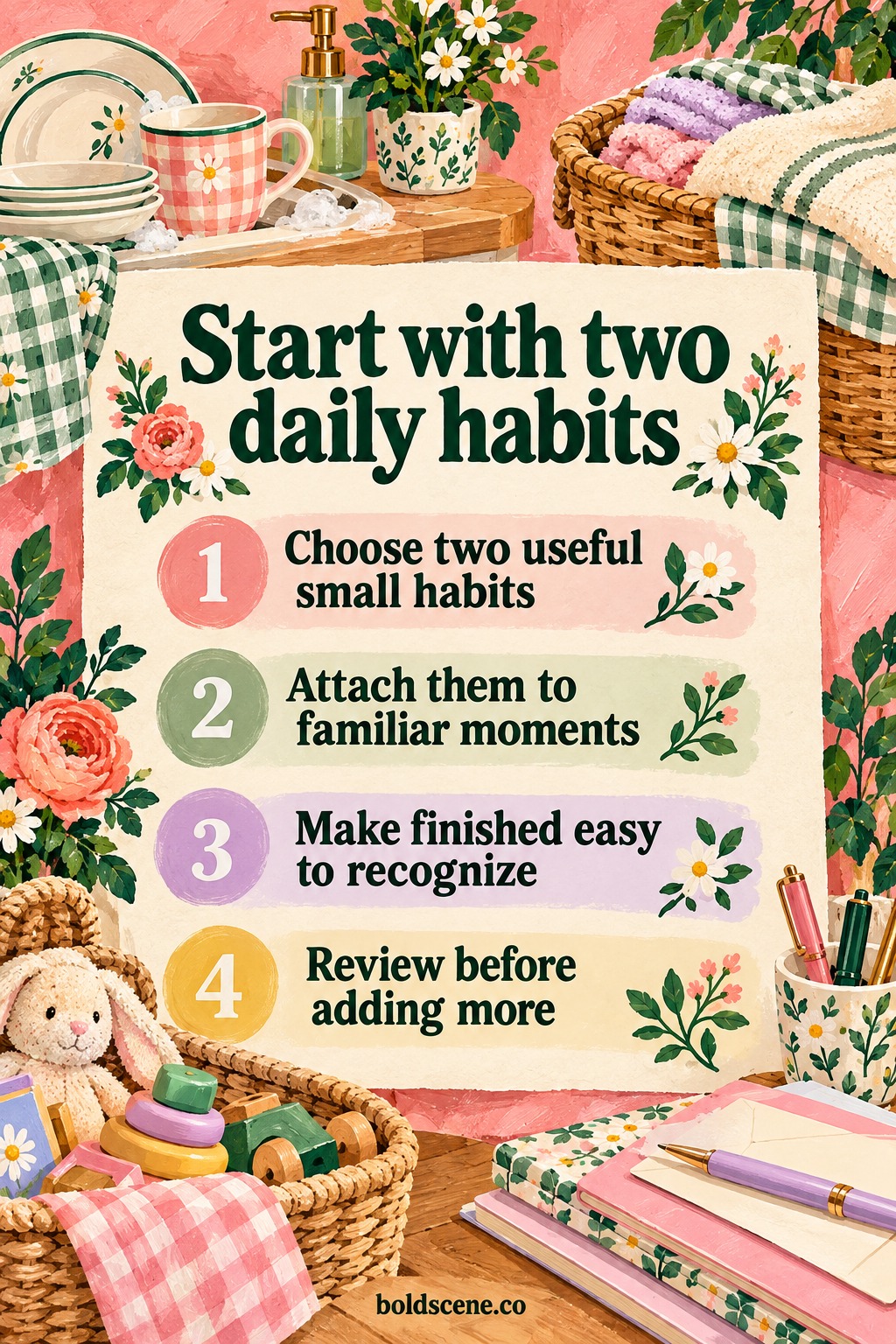
Build a two-habit version first
For one week, try clearing the table after dinner and returning shoes when you come in. Notice what gets in the way. If the shoe basket is awkward or the paper pile has no home, adjust the setup before adding more tasks.
On a difficult day, choose the habits that support your next meal and morning. You can leave lower-priority jobs for another window. Our Free Printables page includes planning tools for those shorter resets.
Writing down those two habits can make the smaller version easier to remember. If your daily list lives on a tablet, Lavender, Lately — Daily To Do gives you room for your top three priorities and everyday to-dos; try adding “table after dinner” beside one other finishable task instead of copying every cleaning idea onto the page.

Digital PDF for use on a tablet with a compatible PDF note-taking app. No physical item will be shipped. Accessories shown are for display only.
A quick visual guide
Let the routine fit the people living there
Daily habits should make ordinary family life easier. Keep the tasks clear, share them where possible, and build slowly.
Get the free 15-Minute Home Reset Checklist for a simple set of starting points.