
The Complete Weekly Reset Routine for Busy Families
It is Sunday evening, and the week ahead is beginning to feel like a pile of loose ends. Someone needs a clean outfit. You cannot remember whether the appointment is Tuesday or Wednesday. Dinner tomorrow is still a question.
A weekly reset is a short check-in that brings those loose ends together. You decide what needs attention before the week gathers speed. You can do it on Sunday, Friday, or whichever day gives your family a useful pause.
In this guide
What a weekly reset does
Gather your essentials
Review the calendar
Plan meals and practical preparation
Share the work
Adapt the routine
Common questions
What is a weekly reset?
A weekly reset combines planning with a small amount of preparation. You review the schedule, choose priorities, check food and clothing needs, and clear a few practical obstacles. A whole-house clean can wait for its own time.
Think of it as setting up the next few days. If Monday morning needs packed bags and a quick breakfast, those details matter more than rearranging a cupboard.
Gather what you need
Bring your calendar, school messages, a pen, and one place to write your priorities. You can use paper or a shared digital note. A basket for loose papers helps if messages tend to collect on the kitchen counter.
Start with twenty minutes as an experiment. Set a timer if that helps you stay focused. You may prefer two ten-minute sessions: one for planning and another for getting items ready.

Illustrative lifestyle photo: cottonbro studio / Pexels.
Step 1: review the calendar together
Find the fixed commitments
Write down appointments, work changes, activities, deadlines, and visitors. Include travel time and who is taking each child. “Practice at five” needs a little more detail if dinner and another pickup happen at the same time.
Notice the tight spots
Circle the days that need an easier plan. If Tuesday includes an appointment and an evening activity, choose a familiar dinner that needs little hands-on work. If Thursday begins early, prepare its bags on Wednesday.
The American Academy of Pediatrics discusses family routines, including ways everyday rhythms can work within family life. Your own routine can be flexible while still giving everyone a shared starting point.
Step 2: choose three priorities
Pick three things that would make the week feel more manageable. For example: return a school form, arrange a ride, and finish one load of uniforms. Keep the list specific enough that you know when each task is complete.
A priority can also be family time or rest. “Keep Saturday morning free” is a decision you can protect when another invitation arrives.
Step 3: make a simple food plan
Check before you choose
Look in the fridge, freezer, and pantry. Note food that needs a place in the next few meals. Then choose dinners that suit the calendar, rather than selecting seven ambitious recipes and trying to fit life around them.
Build the shopping list
Write what is missing, including breakfast, lunch, and snacks. A dinner-only plan can still leave you making a second trip for bread or fruit. Check everyday household supplies while you are there.
For a busy sample week, you might plan pasta on Monday, a quick assembled meal on Tuesday, a familiar tray meal on Wednesday, and an easy pantry dinner on Thursday. Leave room to swap days.
Step 4: prepare the next morning
Check bags, forms, clothes, and anything that needs to leave the house. Ask children to help with one concrete step they can manage. An adult can check the finished bag while a child chooses clothes or puts shoes in the agreed spot.
Try keeping a departure basket near the door for library books and items to return. Keep walkways clear and put small or unsafe items out of young children’s reach.
Step 5: reset one useful space
Choose the kitchen table, the main counter, or the entryway. Clear what does not belong and return the items to their homes. A usable table may help the whole household more than a half-finished attempt to tidy every room.
Our Free Printables page includes a short home reset option for weeks when that is the most useful place to begin.
Share ownership, then stop
Let another adult take a full job, such as checking school messages and preparing the necessary items. Assign a finish time rather than holding the whole process in your head. Children can participate with support, but adults remain responsible for the schedule.
When the reset ends, put the list somewhere visible. You have made the next steps easier to find. You do not need to use the rest of the evening to complete every task you noticed.
Once you know which checks help your family, keeping them together can save you from rebuilding the list every Sunday. Home, Handled — Home Organization Bundle includes The Weekly Reset and The Family Week alongside cleaning, laundry, and recurring chore pages; you could use the first two during your check-in and leave the others for whoever owns those jobs.
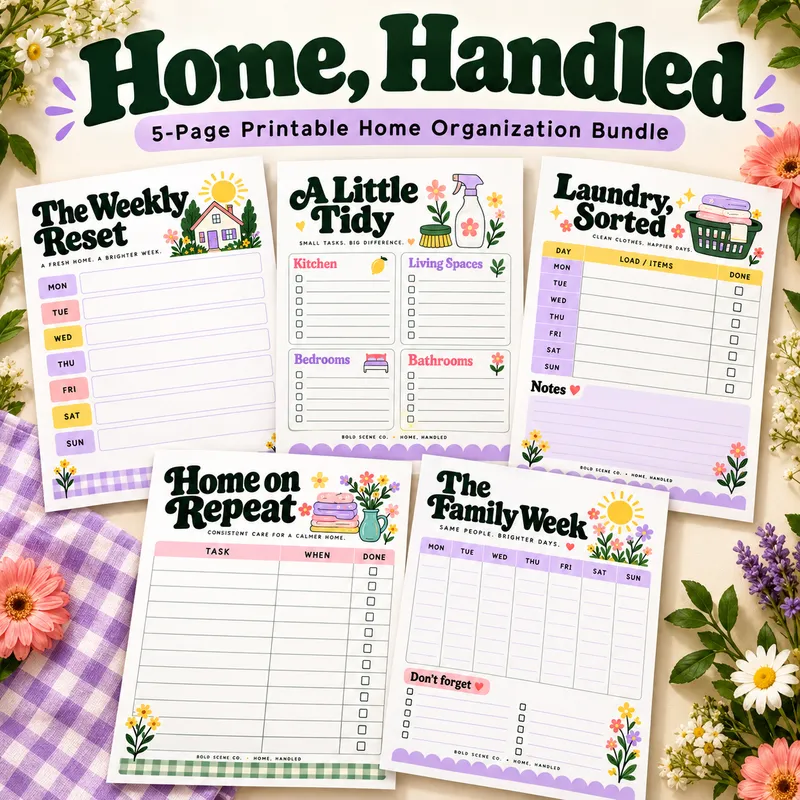
Printable PDF download for personal and family use. No physical item will be shipped. Accessories shown are for display only.
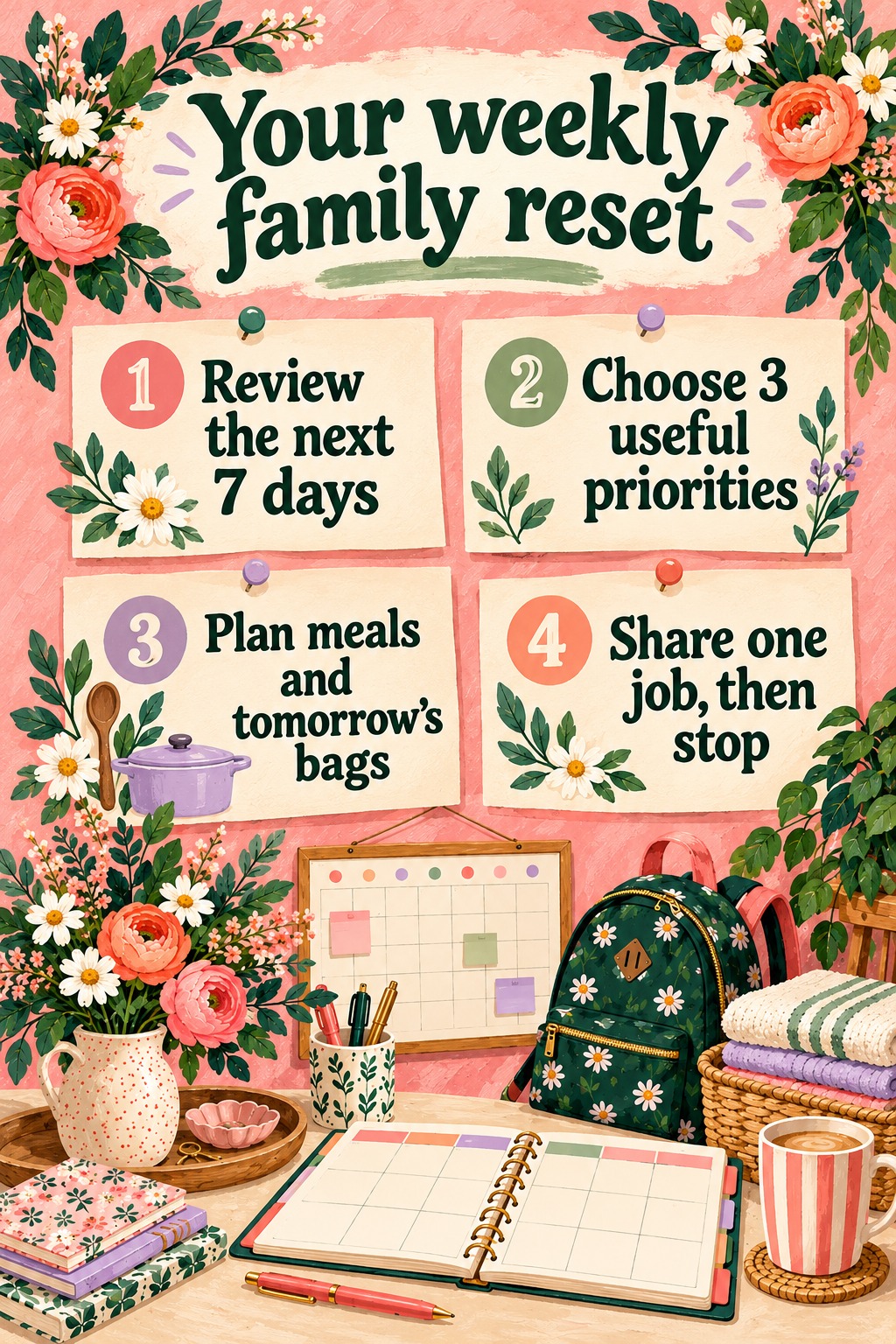
A quick-reference guide from The Rooted Home Journal.
Common questions
What if Sunday is our busiest day?
Choose a different anchor. A Friday afternoon check-in or a Saturday morning review can work. The useful part is looking ahead while you still have time to prepare.
What if I only have ten minutes?
Check tomorrow’s commitments, decide its dinner, and set out what needs to leave the house. Save the broader review for another window. That smaller version still serves a purpose.
How do I restart after missing a week?
Begin with the current calendar. You do not have to catch up on the reset itself. Remove anything outdated and choose the next three useful actions.
Make next week a little easier to enter
A weekly reset works best when it reflects your household’s actual needs. Keep the useful checks, share the preparation, and let the routine grow slowly.
Get the free Sunday Family Reset Checklist for a simple place to begin.