
Family Meal Planning for Beginners
“What’s for dinner?” can feel like a surprisingly large question at the end of a busy day. You may have food in the kitchen and still struggle to turn it into a meal everyone can get on with.
Family meal planning is deciding a little earlier, while you have more room to think. You can start with three dinners and a short shopping list. This guide walks through a flexible system you can repeat without inventing a new menu every week.
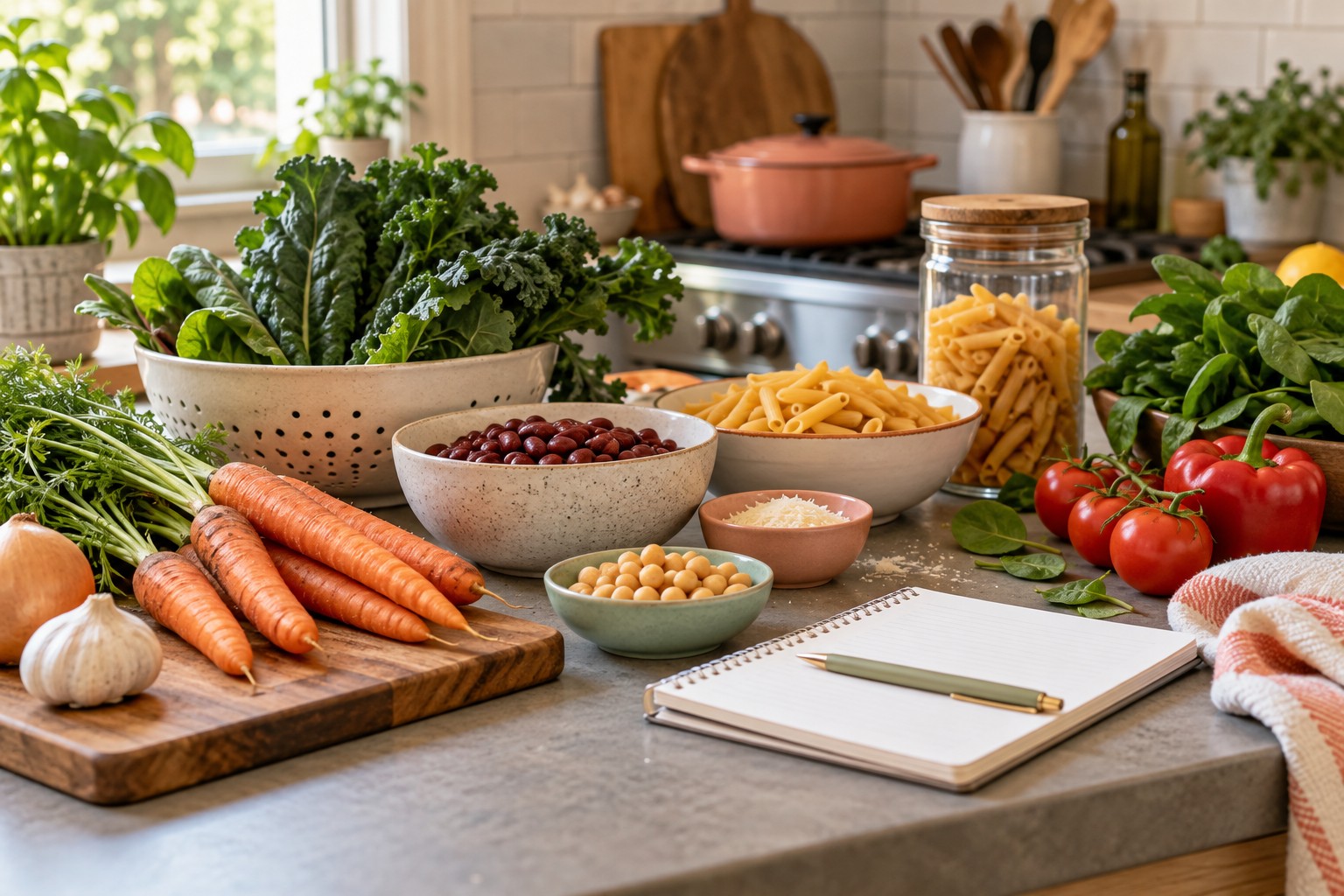
Illustrative lifestyle image created for The Rooted Home Journal.
In this guide
What meal planning includes
Start with your actual week
Check the kitchen
Choose dinners and everyday meals
Write a grocery list
Use a sample plan
Common questions
What is family meal planning?
Meal planning connects the food you have, the meals you want to make, and the time available to prepare them. A plan can be written on paper, kept in a shared note, or clipped to the fridge.
You can change the order of the meals as the week changes. The purpose is to make decisions easier and keep ingredients connected to a use. You do not have to cook something new every night.
Begin with your calendar
Mark late appointments, activities, and evenings when another adult will cook. Choose the easiest meals for the busiest days. Save a recipe that needs chopping and several pans for a day when you have the capacity for it.
For example, a Wednesday with pickup at five and an activity at six needs a different dinner than a quiet Saturday. A familiar sandwich meal or quick pasta may serve that Wednesday perfectly well.
Check what is already in the kitchen
Fridge first
Notice ingredients that need using soon and leftovers with a clear, safe plan. Write down what you can actually turn into a meal. “Carrots and cooked rice” is more helpful than “some vegetables.”
Freezer and pantry next
Look for useful foundations such as pasta, beans, frozen vegetables, or a meal you prepared earlier. Keep the list short enough to use while planning. You do not need an inventory of every spice jar to begin.
MyPlate’s Make a Plan resource offers a useful companion for turning your schedule and available food into a weekly plan.
Choose a few dependable dinners
Begin with family favorites
List five meals you already know how to make. Think about what your household eats and what you can prepare comfortably. Start there before adding inspiration from saved recipes.
Give the meals different effort levels
Include a quick assembled meal, a familiar cooked meal, and something easy to keep on hand. A backup could be pasta with a pantry sauce or another meal that suits your household’s needs. Check that its ingredients are available before relying on it.
Reuse ingredients on purpose
If two meals use carrots, buy an amount that fits both. If you open a container for one recipe, decide where the rest can go. Shared ingredients help connect the plan, but they still need to match what your family will eat.
Remember breakfast, lunch, and snacks
You can repeat these meals to keep decisions manageable. Write two breakfast options, two lunch options, and a few familiar snacks. Check the portions your household usually needs rather than shopping only for the dinner recipes.
A simple week might include oats or toast for breakfast and sandwiches or another familiar lunch. Repetition can be practical. It is one less set of decisions to make during the busiest part of the day.
Turn the plan into a grocery list
Read each meal and write the ingredients you are missing. Add quantities where they matter. Group the list by your usual store sections, then check household essentials so a missing roll of kitchen paper does not trigger another trip.
Our Free Printables page keeps the meal planner alongside the weekly reset tools, so you can connect food planning with the family calendar.
A sample five-dinner week
Monday: a familiar pasta meal.
Tuesday: a quick assembled dinner for activity night.
Wednesday: a tray meal using vegetables already on hand.
Thursday: a bean-based meal or another household favorite.
Friday: a flexible dinner using ingredients still available.
Choose your own meals and add breakfast, lunch, and snacks beneath them. Leave a space for notes about what changed. If Tuesday’s meal moves to Thursday, adjust the ingredient plan too.
As you find a rhythm, it can help to keep the menu beside a simple record of what is already in the kitchen. Around Our Table — Kitchen Bundle combines a weekly dinner planner with pantry and freezer inventories, a recipe keeper, and a meal prep checklist. Start with the dinner page and one inventory; you can add the other sheets when they earn their place in your week.
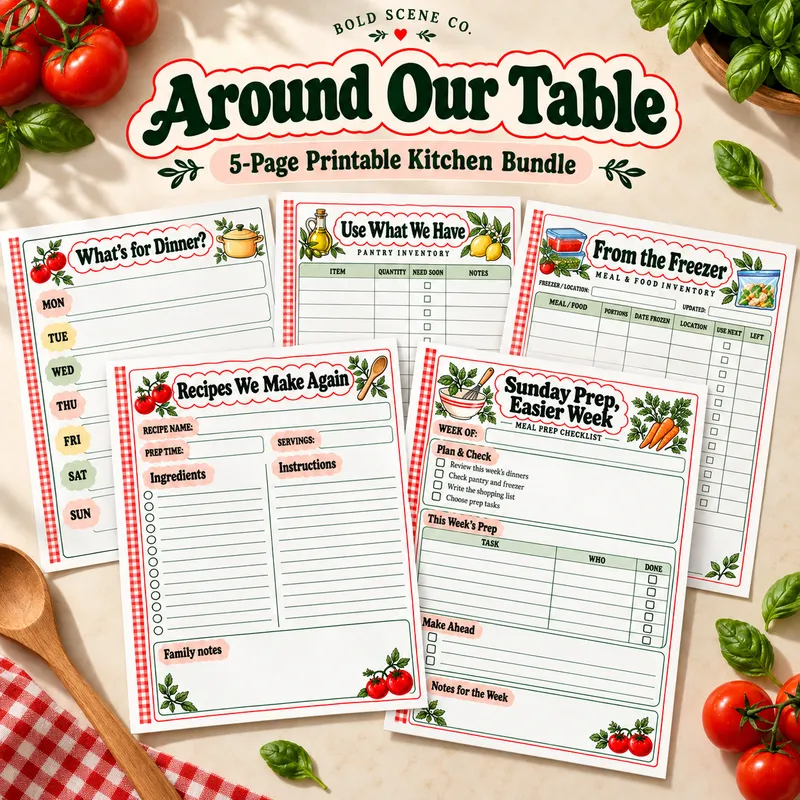
Printable PDF download for personal and family use. No physical item will be shipped. Accessories shown are for display only.
Common beginner mistakes
Planning seven new recipes creates shopping and preparation work. Buying ingredients without choosing when to use them can leave food forgotten in the fridge. Making a plan without checking the calendar can make an ordinary evening feel like a cooking deadline.
Start with familiar meals, a smaller number of decisions, and one backup. Review the plan after a week and keep what worked.
Common questions
Do I need to meal prep too?
You can meal plan without batch cooking. Checking ingredients, writing the menu, and setting out a recipe may be enough. Add preparation only when it helps your week.
What if my family changes its mind?
Keep a little flexibility and let family members help choose from realistic options. A plan can include two meals to swap rather than a completely open question each evening.
How long should planning take?
Try a short first session. Choose three dinners, check their ingredients, and write what is missing. Once you have a favorites list, the process may become easier to repeat.
A quick visual guide
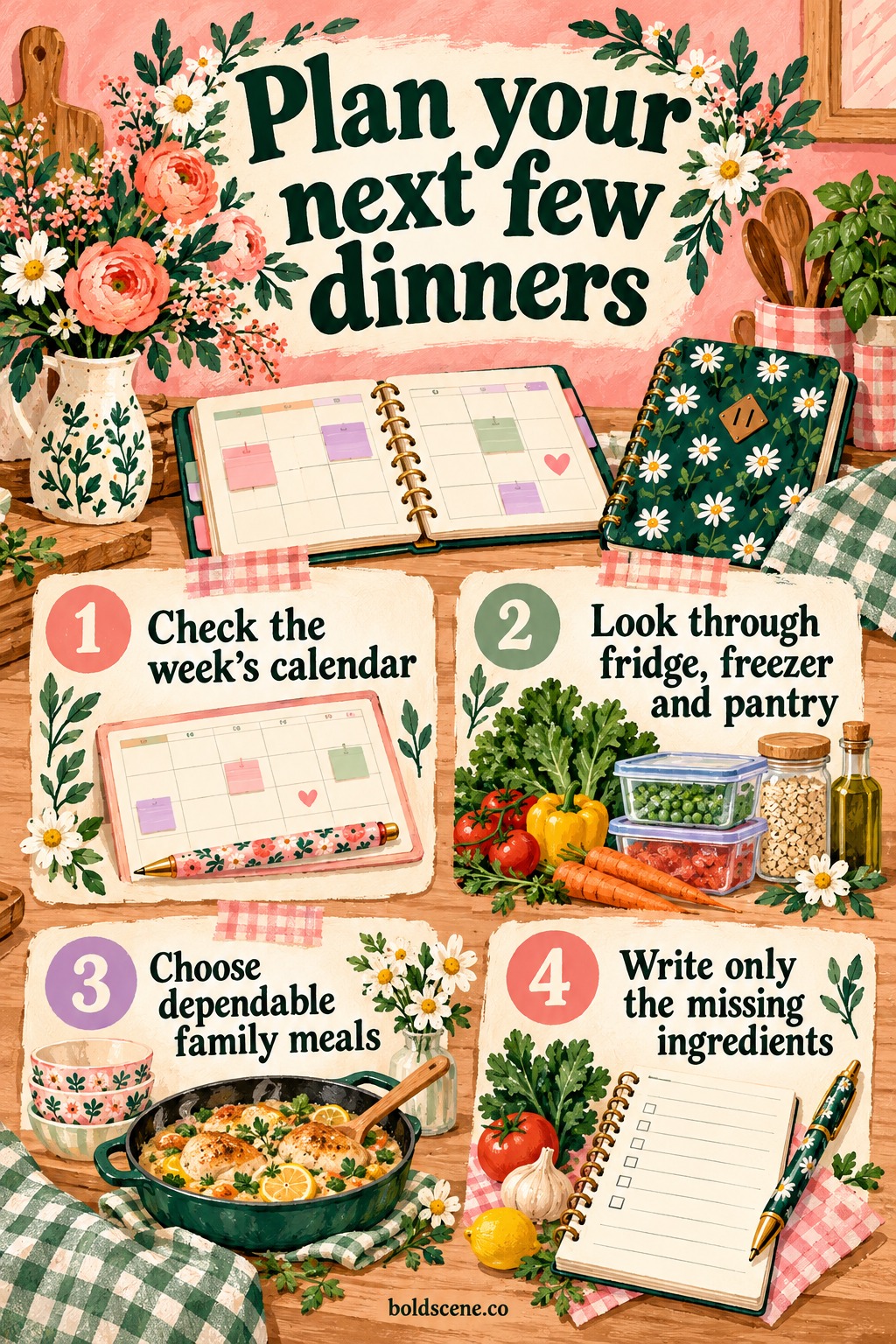
Start with the next few dinners
A useful plan fits your schedule, your kitchen, and your family. You can build it a few meals at a time.
Get the free Weekly Meal Planner to put your meals and grocery list together.