7 Ways to Plan Family Meals on a Budget
You want groceries that turn into meals, rather than a fridge full of unrelated ingredients. When the week is busy, it is easy to buy what sounds useful and work out the details later.
Planning can help you connect each purchase to a meal your household will actually eat. Start with a spending limit that fits your circumstances, then use these seven habits to make the list more deliberate. Prices and household needs vary, so treat the examples as flexible ideas.
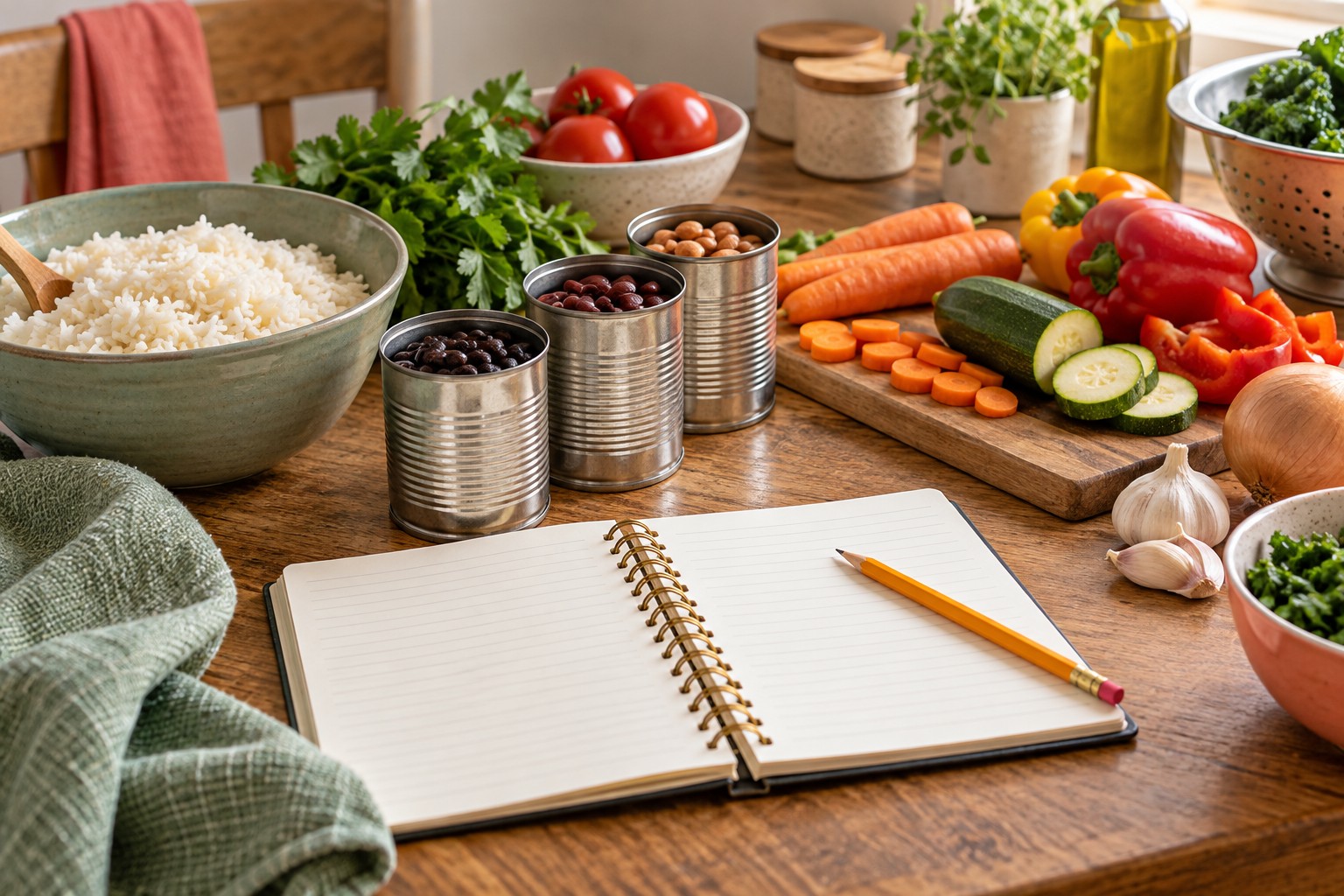
Illustrative lifestyle image created for The Rooted Home Journal.
Why does a reasonable grocery trip grow?
A list may cover dinner ingredients while leaving out breakfast, snacks, or household supplies. Extras can also arrive through duplicate purchases and ingredients for meals you never have time to make. A quick kitchen and calendar check helps reveal those gaps.
7 planning habits to try
1. Check your food before choosing meals
Look for useful ingredients already available. If you have pasta, beans, or frozen vegetables, choose meals that give them a purpose. Write down what is missing rather than rebuilding the whole meal from scratch.
2. Repeat meals your family enjoys
Keep a short favorites list. Familiar recipes make quantities easier to judge and reduce the number of new ingredients you need. Choose a few dependable dinners before adding a new one.
3. Plan around the busiest evenings
A meal that stays uncooked on activity night does not help the plan. Choose a quick option for that evening and save the more involved recipe for another day. Your time is part of the planning decision.
4. Compare the amount you will use
A larger package is useful when you can use or store it appropriately. Check the unit price and your realistic needs. Buying extra only helps if the extra has a place in your plan.
5. Give shared ingredients two jobs
Use carrots in a tray meal and another dinner, or choose two meals that use a familiar pantry staple. Plan the second use before shopping. This keeps a partial package from becoming a mystery at the back of the fridge.
6. Include everyday meals and a backup
Write down breakfast, lunch, and snacks as well as dinners. Keep ingredients for a simple backup meal that suits your family. A realistic fallback can help when the planned cooking window disappears.
7. Review the receipt with the plan
After shopping, notice which purchases were missing from the list and which meals worked. Use that information for next week. The aim is to learn your household’s patterns without turning every grocery trip into a judgment.
What this could look like
Imagine you already have rice, frozen vegetables, and a tin of beans. You might plan a rice bowl one evening and a bean-based dinner another, then buy the missing ingredients. Add two family favorites and a quick meal for activity night. Check breakfast and lunch before finishing the list.
MyPlate’s meal planning resource has more ideas for planning from available food and household preferences. Our Free Printables page keeps the weekly planner easy to find.
You can make that kitchen check easier to repeat with the pantry and freezer pages in Around Our Table — Kitchen Bundle. Note the rice, vegetables, and beans you already have, then use the dinner planner to give them a meal before writing the missing ingredients on your list. The pages support the decisions you are already making, without requiring a new recipe for every night.
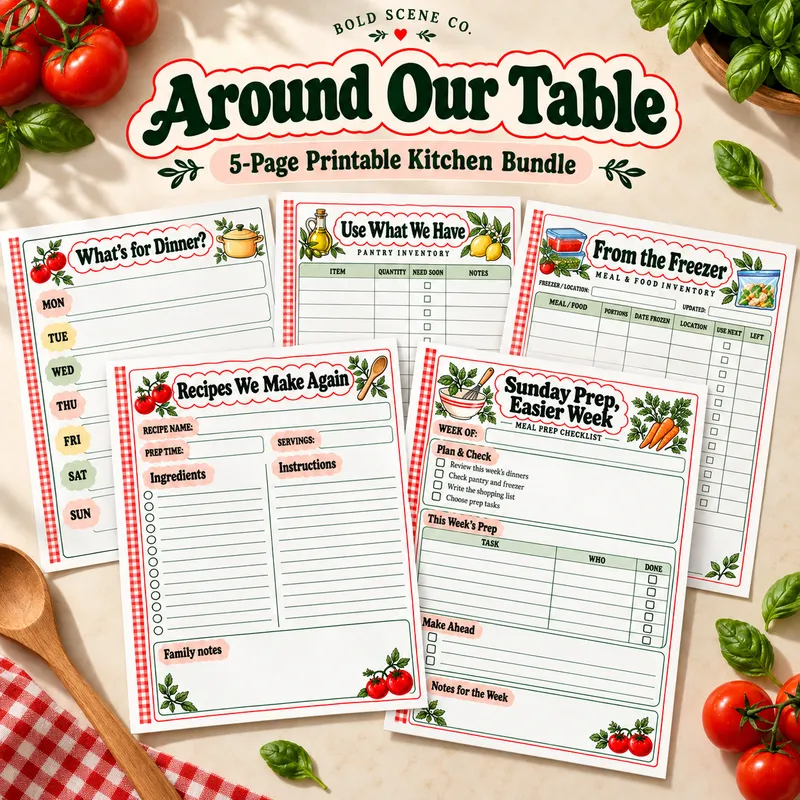
Printable PDF download for personal and family use. No physical item will be shipped. Accessories shown are for display only.
A quick visual guide
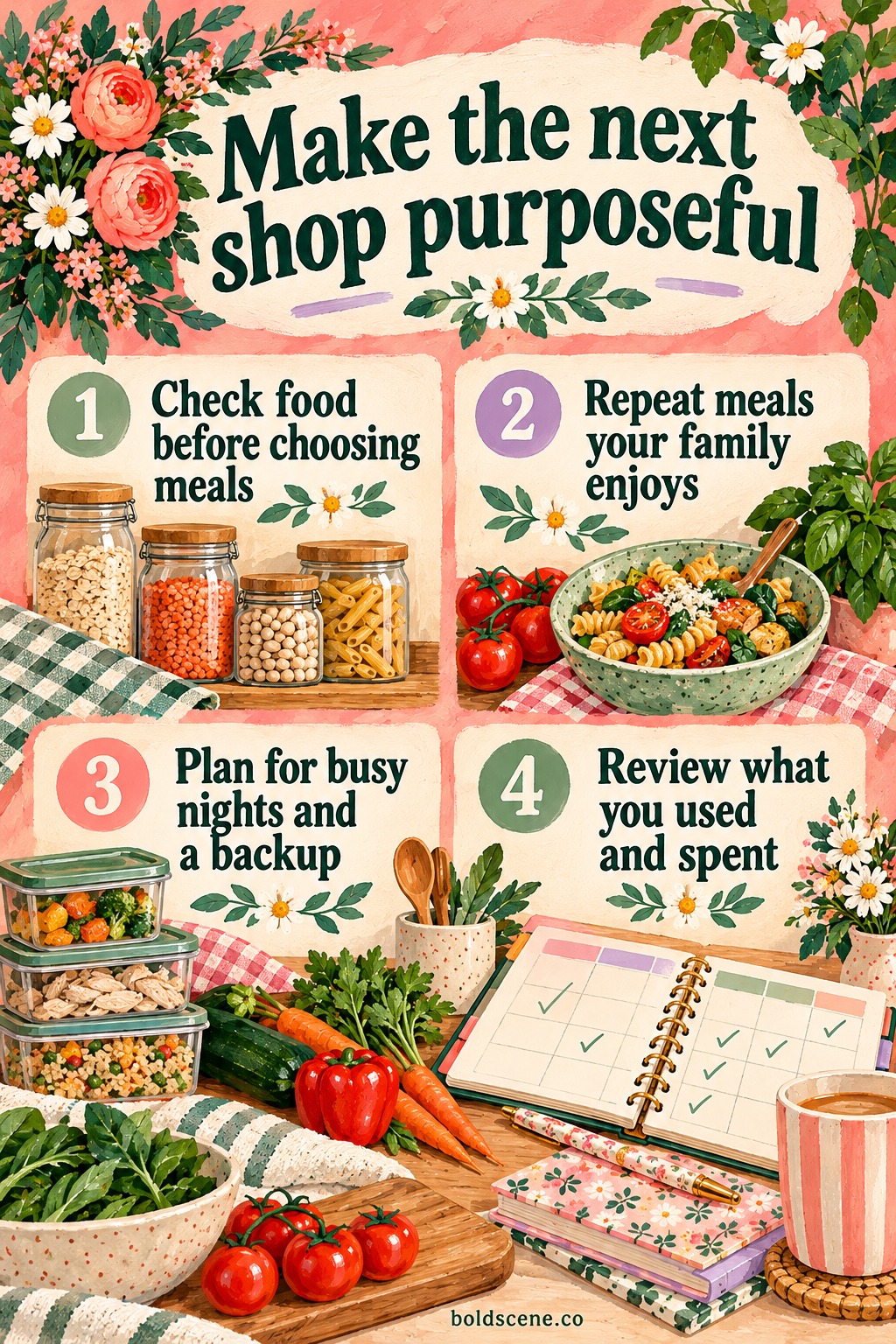
Make the next shop more purposeful
A useful grocery plan connects your calendar, food, and list. Choose one habit this week and keep the version that helps.
Get the free Family Grocery Budget Tracker to put your weekly budget, actual spending, and shopping priorities together. Record each trip and use the totals to plan next week.