How to Make a Grocery List That Saves Time
You arrive home with the dinner ingredients and realize you forgot the bread, washing-up liquid, and the fruit everyone eats at breakfast. The shopping trip is finished, but the list was only half the picture.
A useful grocery list comes from your meals and your household’s ordinary needs. These seven steps help you build one that is easier to follow, whether you shop in person or place a pickup order.
Illustrative lifestyle image created for The Rooted Home Journal.
What makes a grocery list useful?
It tells you what to buy, how much you need, and where it fits. A running list captures things as they run out. A quick review before shopping turns those notes into a plan for the next few days.
7 steps to a clearer list
1. Start with the days you are feeding people
Check how many breakfasts, lunches, and dinners you need at home. Note visitors or evenings away. A holiday week may look very different from a typical one, so use this week’s calendar.
2. Look through the kitchen
Check the fridge, freezer, and pantry before adding ingredients. You may already have the pasta or seasoning for a planned dinner. Cross out duplicates and note ingredients that need a use.
3. Read each planned meal
Write what is missing for each recipe or familiar meal. Include the small things you rely on, such as bread for sandwiches or a topping for breakfast. Do not rely on remembering them once you are shopping.
4. Add quantities that mean something
“Apples for five packed lunches” gives you a useful check. “Milk” may need a quantity based on your household’s usual use. Use amounts that fit your family and the time until the next shop.
5. Group items by section
Try produce, chilled food, protein, pantry, frozen, and household supplies. Follow the order of your usual store if that helps. With an online order, categories can make the final review easier too.
6. Include a substitution note
If a specific ingredient matters, note an alternative you know works in the meal. For a flexible vegetable side, write the options your household uses. This can make an unavailable item easier to handle without changing the whole menu.
7. Do one final household check
Look at snacks, pet supplies if relevant, and the everyday items that tend to run out. Ask the other adults to add their needs before the list closes. Then choose one current version to shop from.
A simple example
For pasta night, your list might say pasta, sauce ingredients, and a vegetable. After checking the pantry, pasta comes off the list. You add bread for lunches and breakfast fruit, then move the remaining items into store sections. The plan is now broader than one dinner recipe.
MyPlate’s Make a Plan guide is another useful meal planning reference. Our Free Printables page keeps your list and meal planning resources together.
If the hardest part is remembering what to check before you write that list, the inventory pages in Around Our Table — Kitchen Bundle can give you a starting point. Keep the pantry and freezer sheets near your weekly dinner plan, update what you use, and take a quick look before shopping. You can still keep your grocery list in the notebook or app your family already shares.
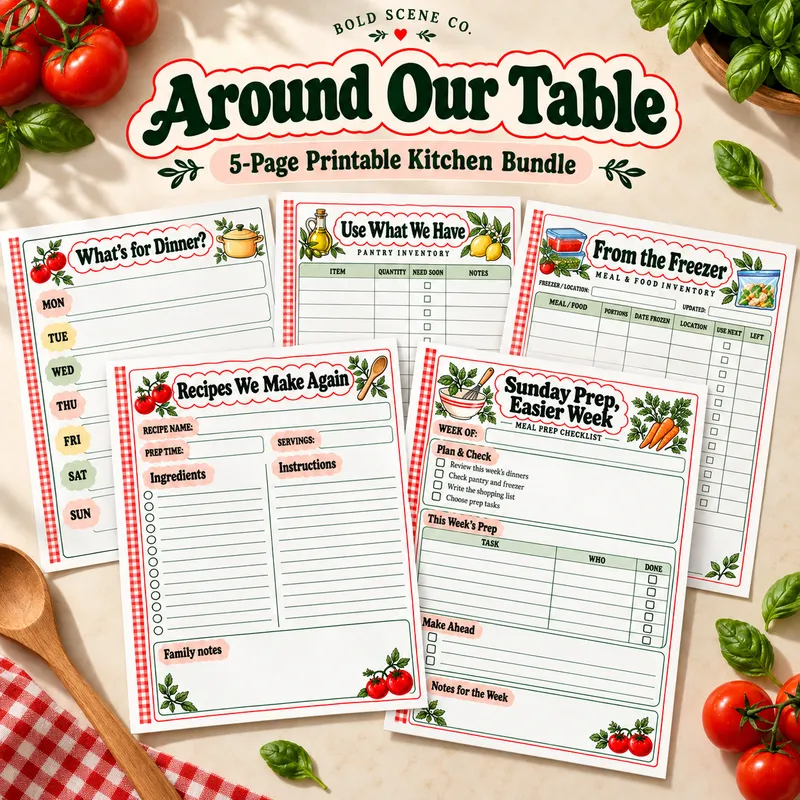
Printable PDF download for personal and family use. No physical item will be shipped. Accessories shown are for display only.
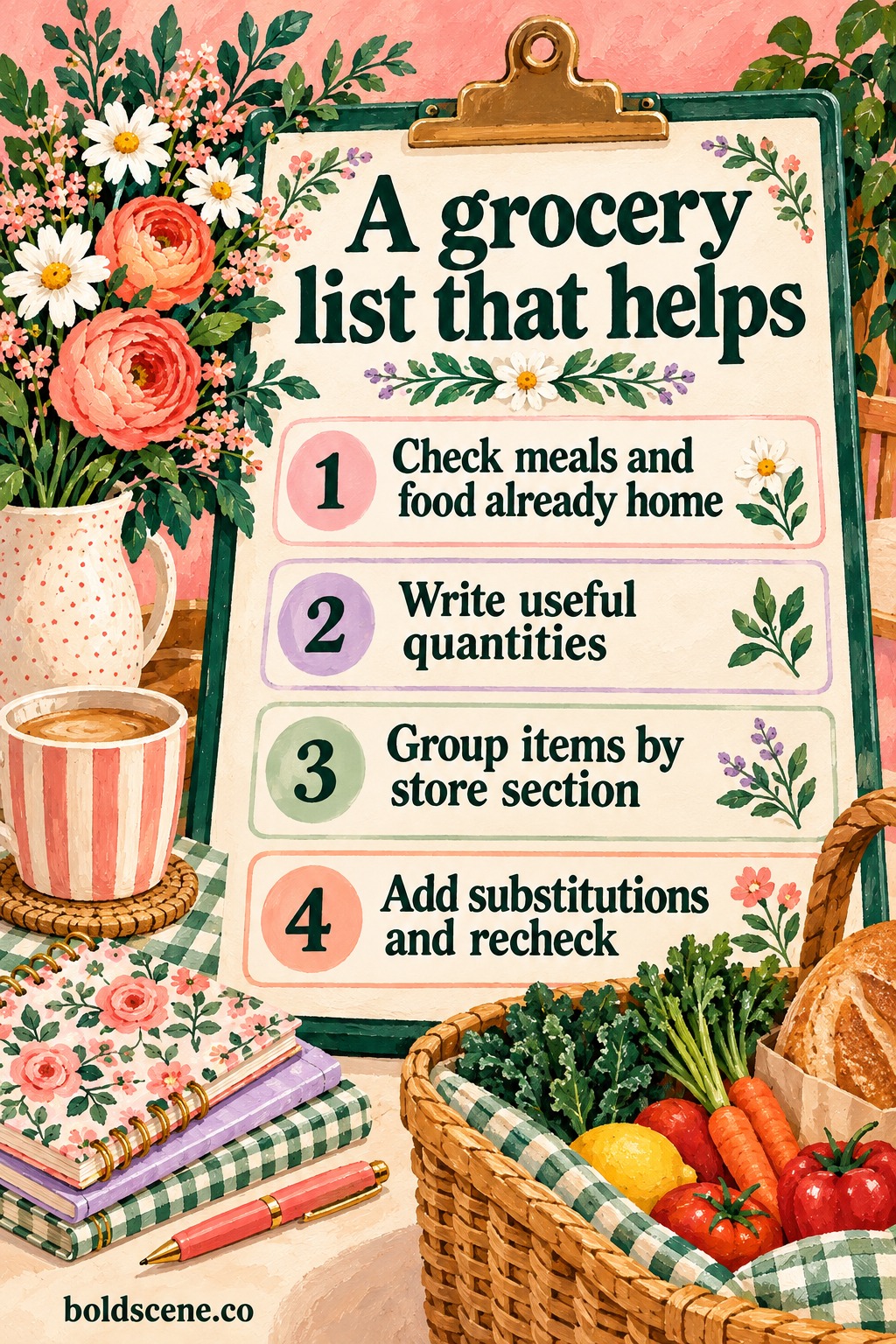
A quick visual guide
Give the list a regular home
Keep the running list somewhere the household can find, then review it before shopping. A small check can make the trip feel more purposeful.
Get the free Family Grocery Budget Tracker to keep shopping priorities and spending beside your list. Use its pantry, fridge, and freezer checks before you head to the checkout.